110 personalised NFC resin badges. 20 days. One developer. Entirely managed by AI.
The Brief Nobody Had Done Before
When the Aditya Birla Group communications team approached House of 3D for their CommsClave 2026 internal conclave, the brief sounded deceptively simple: create personalised badges for 110 senior executives. What followed was a 20-day deep dive into the intersection of resin manufacturing, AI-assisted design, automation engineering, and enterprise-grade digital delivery — a project that would become the blueprint for phygital product manufacturing in India.
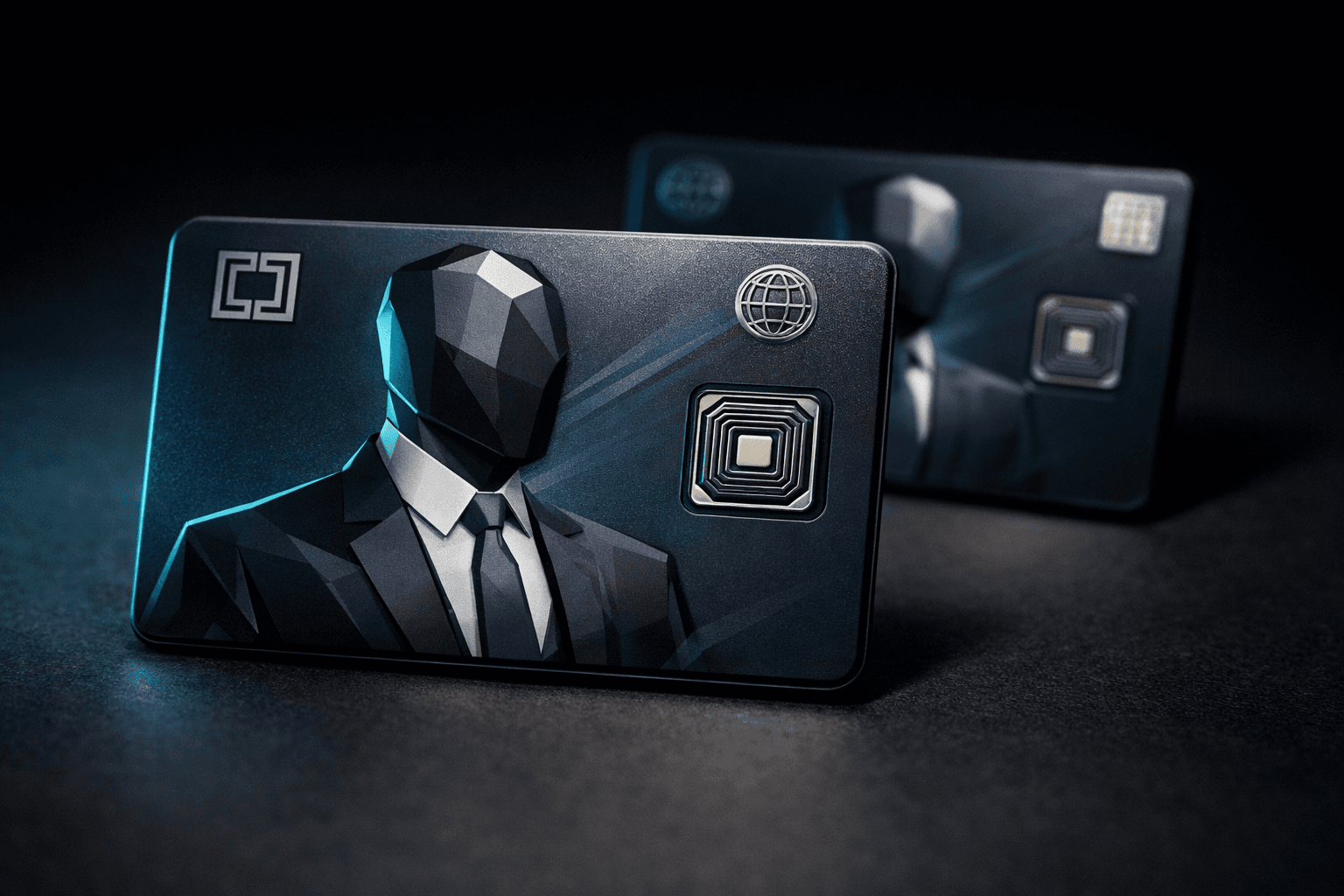
The client wanted something that had never been done in India at this scale: each of the 110 attendees would receive a physical resin badge that, when tapped with a smartphone, would open a personalised digital experience — their name, designation, portrait illustration, and CommsClave branding, beautifully rendered on a live webpage. Not a generic QR code linking to a PDF. Not a printed name tag. A physical object with a digital soul.
The Design Problem
The first week was not spent manufacturing anything. It was spent figuring out what the badge should look like. The badge format was fixed — CR-80, the same dimensions as a credit card at 54×85.6mm. But within that canvas, everything was open. The client wanted a premium feel. Raised 3D elements. A portrait of each attendee. CommsClave and Aditya Birla Group branding. And it all had to work at scale — 110 unique badges, each completely different.
The first challenge was the portrait. Multiple AI-generated avatar styles were tested — chibi illustrations, coin-style portrait reliefs, cinematic 3D renders. Each had problems. Chibi looked too playful for a senior executive audience. Coin portraits lost facial detail at badge scale. Cinematic renders were too photorealistic to translate into a raised resin element without losing definition. The breakthrough came with illustrated portraits — a stylised but recognisable likeness, generated using Learnodo AI, that could be extruded into a 3D relief without losing essential facial features. The client saw the first sample and approved the direction. Then gave feedback. Then more feedback. Multiple rounds of iteration followed before the final design language was locked.
The Automation Architecture
With the design locked, the real engineering began. 110 unique badges meant 110 unique STL files for printing, 110 unique UV print files for colour, and 110 unique HTML pages for the digital experience. Doing this manually was not an option.
AI was brought in as the engineering brain. The entire badge generation pipeline was designed collaboratively — a web application with a badge engine at its core. The system took a single input — the attendee PDF from the client — and produced every output automatically. The pipeline worked like this: extract each attendee data and photo from the PDF, convert to STL via a custom script, generate the UV print PDF, and create the personalised HTML badge page. Every step automated. A job that would have taken a team of designers three weeks was reduced to a pipeline that ran overnight.
When Automation Meets Reality
Automation is only as good as the data it processes. And attendee photos, as it turns out, are wildly inconsistent. The silhouette detection system — built to identify the boundary of a person within each photo — worked perfectly for most attendees. But for a handful, including several with complex backgrounds, dark clothing, or unusual angles, detection failed silently. The system would produce a badge that looked correct until you looked closely — a truncated silhouette, a missed shoulder, a face that blended into the background.
Identifying these failures required building a visual inspection layer. Each generated badge was programmatically checked against heuristics — centre pixel density, fill percentage within the silhouette boundary — and flagged for manual review if outside acceptable ranges. Flagged badges were reprocessed manually: individual PDFs extracted, silhouettes inverted, portraits regenerated from scratch. The reference standard throughout was two badges that came out perfect early in the process. Every other badge was measured against these two.
The Physical Manufacturing Challenge
Each badge was printed on the Jupiter SE resin printer — capable of producing the fine detail that portrait reliefs require. The first batch revealed a problem immediately: elephant foot. The base of each badge was spreading slightly wider than designed, caused by over-exposure of the bottom layers. The fix required precise calibration — bottom exposure reduced to 35–40 seconds, bottom layer count fixed at 4. The problem disappeared.
UV printing presented a different challenge. Each badge needed full-colour UV print applied with sub-millimetre precision onto the raised resin surface. A physical jig was designed and manufactured — a DXF-specified alignment tool corrected for FDM shrinkage — that held each badge in exactly the same position under the UV printer for every single run. The registration was perfect from the first test. NFC chips were then embedded manually into each badge, positioned precisely to sit flush with the surface without interfering with the raised 3D elements.
The Digital Layer
The physical badge was only half the product. Each NFC chip linked to a personalised HTML page — lean, fast-loading files of approximately 175KB each, referencing all assets from Secured Storage. When an attendee tapped their badge, they saw: the CommsClave 2026 branding, the Aditya Birla Group logo, their illustrated portrait, their full name, and their designation — formatted with care, exactly as the client specified. These pages were hosted at houseof3d.in They loaded in under a second on any smartphone.
The Result
110 badges. 20 days. Multiple design iterations, a silhouette detection system built from scratch, a physical manufacturing pipeline calibrated to sub-millimetre precision, and a digital delivery infrastructure that continues working every time an NFC chip is tapped. Every chip worked. Every page loaded. Every portrait was recognisable.
What This Proves
CommsClave 2026 was not a proof of concept. It was a proof of scale. House of 3D demonstrated that phygital personalised products — physical objects with embedded digital experiences, unique to each recipient — can be designed, manufactured and delivered at enterprise scale in India, managed end-to-end by AI-assisted automation.
If your organisation is planning a conference, awards ceremony, product launch, or executive event — the infrastructure is built. The pipeline is proven. Contact House of 3D to discuss your project.